
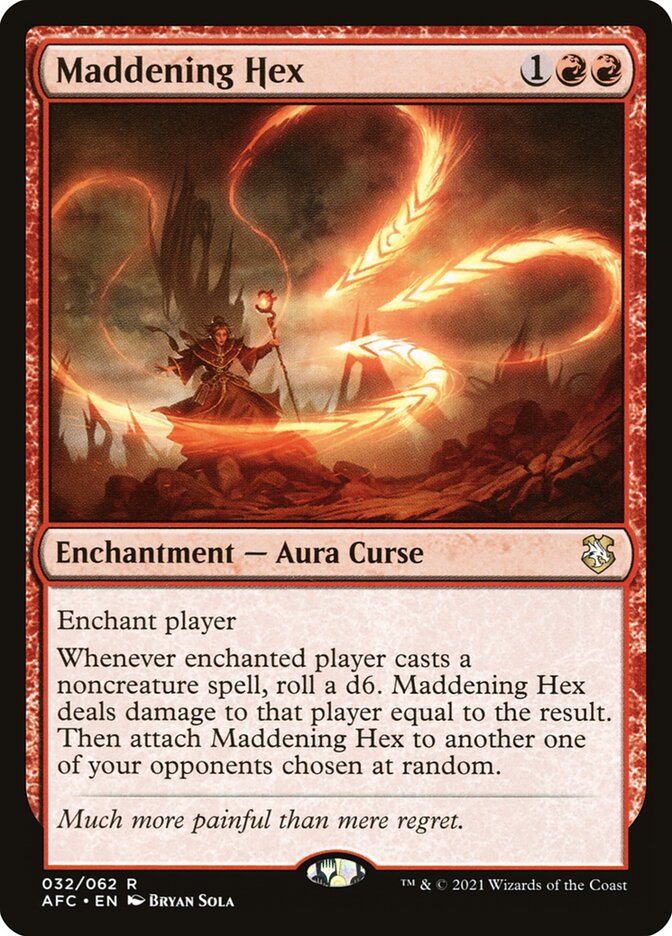
Maddening Hex
Maddening Hex parallels problematic designs like Vial Smasher the Fierce and Eidolon of the Great Revel, but accumulates multiple problematic factors that push it beyond acceptable boundaries. The three-mana cost makes deployment trivial, while dealing 1-6 damage randomly (averaging 3.5) creates significant clock pressure. The curse's self-triggering nature means removal attempts cause additional damage, creating a damaging paradox for the hexed player.
As a mono-red enchantment, it slots perfectly into aggressive strategies while being notoriously difficult to answer. Enchantments represent the most resilient permanent type, with several colors lacking efficient removal options entirely. The random damage variance transforms games into dice-rolling exercises rather than strategic contests—while randomness has its place, deciding match outcomes through pure chance undermines competitive integrity.
The multiplayer design assumption of random retargeting becomes meaningless in duel formats, where the curse permanently locks onto the single opponent. This removes the self-balancing mechanism intended to keep the effect fair.
While similar effects like Pyrostatic Pillar and Spellshock remain legal due to their symmetrical or predictable nature, Maddening Hex combines too many problematic elements.
Key ban reasons:
- Trivial three-mana deployment for recurring damage
- Self-triggering creates removal paradox
- Enchantments lack sufficient answers across colors
- Random variance determines game outcomes
- Multiplayer balance mechanism absent in duel
- Perfect fit for already-dominant aggressive strategies
Maddening Hex must be banned to prevent games from devolving into random damage races lacking strategic counterplay.