November 30, 2020 Announcement/Update
November 30, 2020

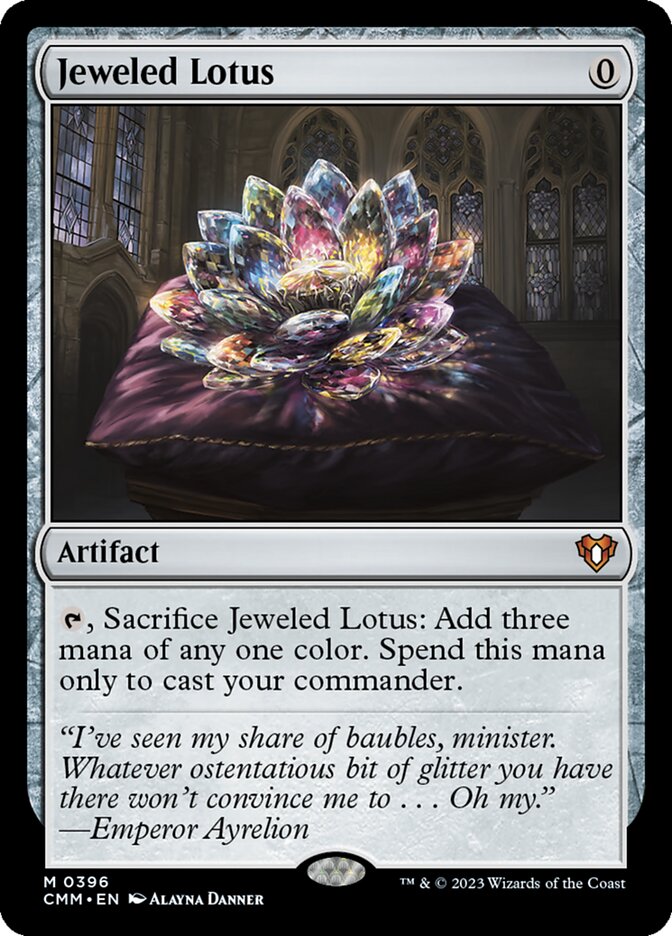
Jeweled Lotus

Jeweled Lotus

Preemptive bans without supporting data remain exceptionally rare in our format management. Jeweled Lotus represents such an exception due to its unmistakable parallel to Black Lotus, arguably Magic's most broken card. The design assumes multiplayer politics where using such acceleration makes you an immediate target for all opponents. This crucial balancing factor disappears entirely in duel formats.

Without multiplayer self-correction, Jeweled Lotus introduces unacceptable variance by enabling commanders far earlier than intended. Turn-one or turn-two commander deployment fundamentally breaks intended game pacing and creates insurmountable advantages based purely on opening hands rather than strategic play.

This ban establishes clear precedent: cards approaching this power threshold will face immediate prohibition to protect format integrity.

Key ban reasons:

  • Direct parallel to Black Lotus's broken acceleration
  • Multiplayer drawback completely absent in duel format
  • Creates extreme variance through early commander deployment
  • Warps games around opening hand rather than gameplay
  • Power level exceeds acceptable design boundaries
  • Threatens fundamental turn structure and pacing

Jeweled Lotus must be banned immediately to prevent games from being decided by explosive, variance-driven starts rather than strategic decision-making. Future cards of comparable power will receive similar treatment.
Uro, Titan of Nature's Wrath

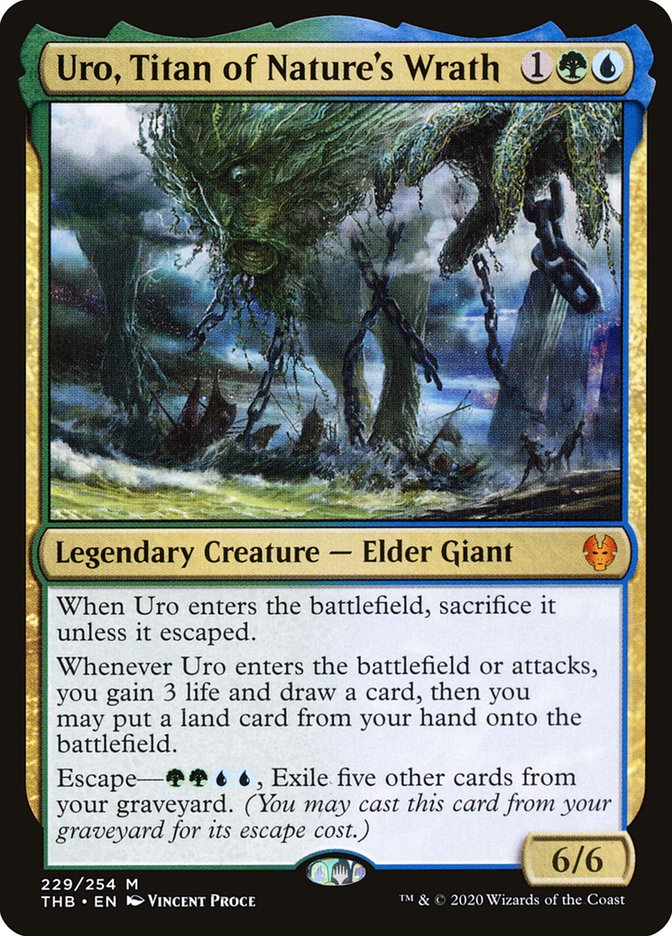
Uro, Titan of Nature's Wrath

Uro, Titan of Nature's Wrath enables blue-dominant control strategies to overcome their fundamental weakness against aggressive decks. The combination of recursive availability, life gain, and built-in card advantage creates an excessively complete package. This commander invalidates traditional control vulnerabilities while dominating both aggressive matchups and board stalls with equal efficiency.

Players discovered additional exploitation through library manipulation, sending Uro directly to graveyards for immediate value. This transforms the card into a pseudo-second commander accessible through an alternate zone. The convergence of command zone recursion and graveyard accessibility produces toxic gameplay patterns—Uro functions simultaneously as an unstoppable commander and an undercosted value engine from the main deck.

Statistical analysis confirms widespread adoption matching Uro's dominance in sanctioned formats. The card's ubiquity reflects its fundamental design problems rather than healthy strategic diversity. Games involving Uro devolve into repetitive, uninteresting patterns that contradict core format philosophy regarding interactive, dynamic gameplay.

Recent metagame data shows Uro's presence crossing critical thresholds, validating community concerns about its warping effect.

Key ban reasons:

  • Eliminates control's natural weakness to aggression
  • Provides excessive value through multiple axes simultaneously
  • Functions as both commander and graveyard value engine
  • Creates repetitive, uninteresting gameplay patterns
  • Achieved problematic metagame saturation
  • Invalidates traditional strategic tensions

Uro, Titan of Nature's Wrath must be banned to restore proper archetype balance and eliminate gameplay patterns that reduce strategic diversity.

Omnath, Locus of Creation

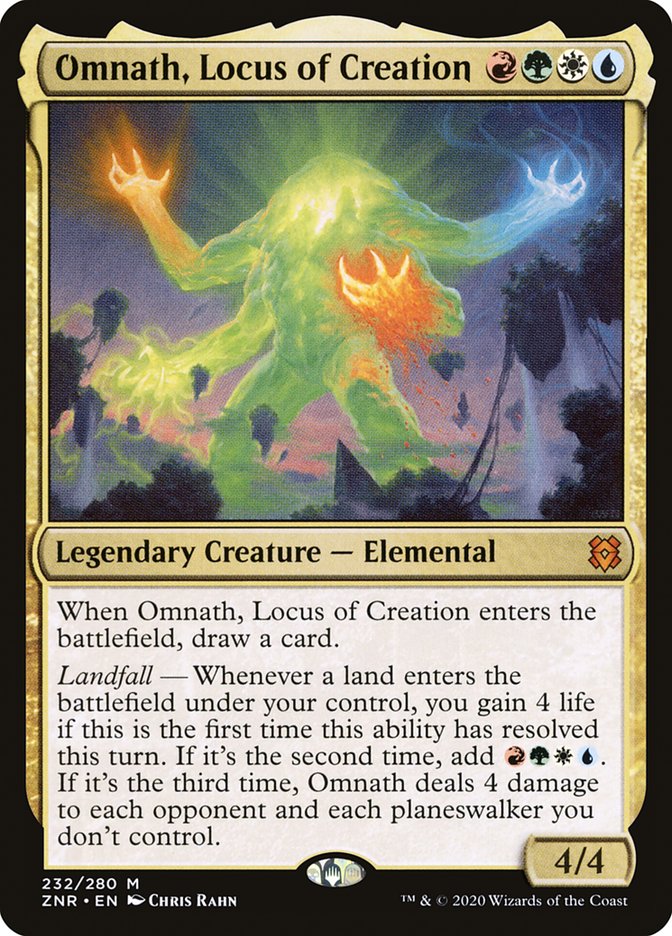
Omnath, Locus of Creation

Omnath, Locus of Creation demonstrates steady competitive growth, tracking closely behind Uro, Titan of Nature's Wrath in top finishes. Duel Commander's extensive land-based toolbox enables the multiple land drops these strategies require, creating cascading advantages through tempo, card draw, and lifegain simultaneously.

This convergence of benefits allows Omnath to dominate both aggressive and control matchups with equal efficiency. The land-centric strategy proves particularly resilient since lands represent the permanent type most difficult to interact with meaningfully. Omnath invalidates traditional metagame dynamics by excelling against supposedly unfavorable matchups.

Statistical analysis reveals concerning trends: Omnath surpasses 5% representation in top finishes with exceptional conversion rates throughout tournaments. This data confirms what many players already recognized—the deck has become an obvious choice for competitive success. The trajectory mirrors Uro's rise, suggesting similar format-warping potential.

Key ban reasons:

  • Combines tempo, card advantage, and lifegain too efficiently
  • Dominates both aggressive and control matchups
  • Land-based strategy resists conventional interaction
  • Exceeded 5% metagame threshold with high conversion rates
  • Parallels Uro's problematic dominance pattern
  • Becoming default competitive choice

Omnath, Locus of Creation must be banned as a commander to prevent four-color value engines from invalidating traditional metagame dynamics through overwhelming resource generation across multiple axes.

← Back to Announcements