February 24, 2020 Announcement/Update
February 24, 2020

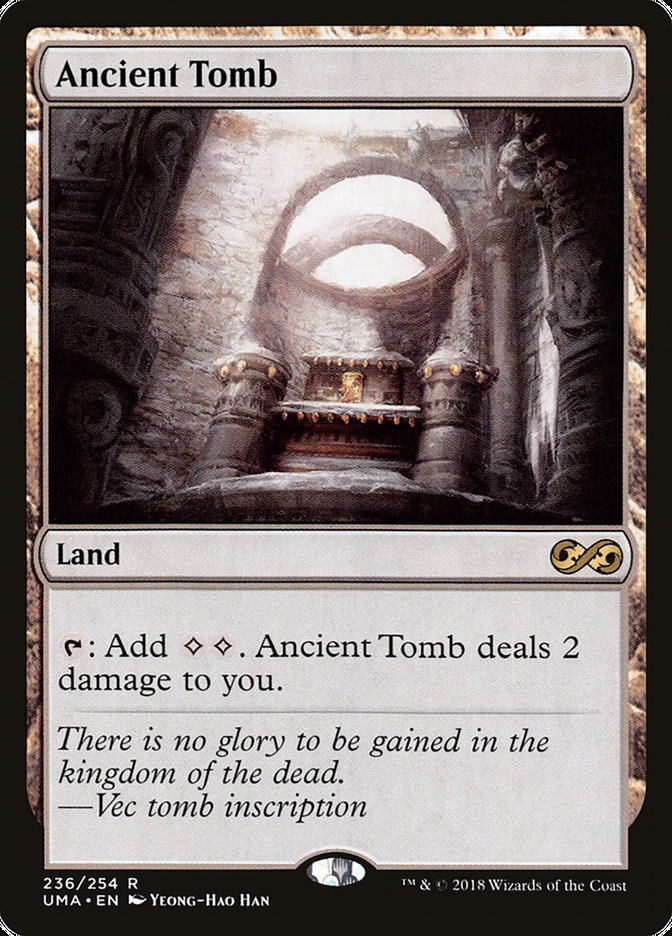
Ancient Tomb

Ancient Tomb

Ancient Tomb was legal in the format with players starting at 20 life points, under the assumption that the card would be kept in check by the lower life total and the viability of aggressive decks. While this land does have a drawback against aggressive strategies, those same aggressive decks often utilize the card themselves.

Trading life for resources has always been a dangerous mechanic, and it becomes even more problematic when employed by aggressive decks. Ancient Tomb enables explosive starts by providing permanent extra mana from the turn it enters play - a significant tempo gain, particularly when used to cast and recast commanders. Whether deploying commanders or powerful spells like Damnation, Fiery Confluence, or Thought-Knot Seer, the advantage gained typically outweighs the life loss from Ancient Tomb. When in the opening hand or drawn early, Ancient Tomb creates lopsided games where one player pulls decisively ahead while the opponent struggles to catch up.

Key ban reasons:

  • Provides excessive tempo advantage through permanent mana acceleration
  • Life loss drawback insufficient to balance the power level
  • Creates one-sided games when drawn early or in starting hand
  • Facilitates repeated commander casts with minimal real cost
  • Reduces strategic diversity by warping gameplay patterns

In order to maintain interesting and fair games, Ancient Tomb must be banned.
Mox Opal

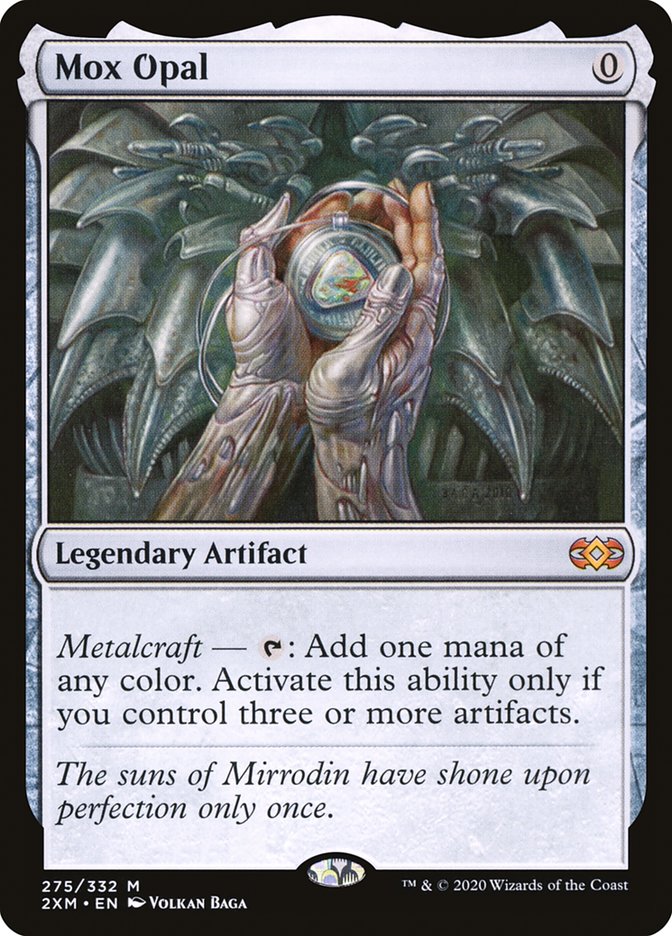
Mox Opal

Mox Opal appears universally in artifact-focused strategies, similar to Ancient Tomb's ubiquity. The metalcraft requirement theoretically separates it from unconditional acceleration like Mox Sapphire, but this restriction becomes trivial in dedicated artifact shells.

Achieving three artifacts proves effortless when entire decks consist of the card type—or when commanders themselves like Silas Renn, Seeker Adept count toward metalcraft. Strategies helmed by Sai, Master Thopterist or Akiri, Line-Slinger not only deploy commanders ahead of schedule but benefit from Opal's late-game utility as well.

The card surpasses Ancient Tomb within these archetypes by providing painless acceleration while offering complete color flexibility. Unlike Tomb's life payment creating meaningful tension, Opal delivers pure advantage without drawback. Modern format's ban for identical concerns validates these issues across competitive environments.

Key ban reasons:

  • Metalcraft requirement meaningless in artifact strategies
  • Provides free acceleration without Ancient Tomb's life cost
  • Enables early commander deployment and late-game advantage
  • Generates any color without restriction or payment
  • Modern ban confirms fundamental balance problems
  • Creates excessive variance in artifact-centric openings

Mox Opal must be banned to prevent artifact strategies from accessing costless, painless acceleration that breaks fundamental mana development principles.

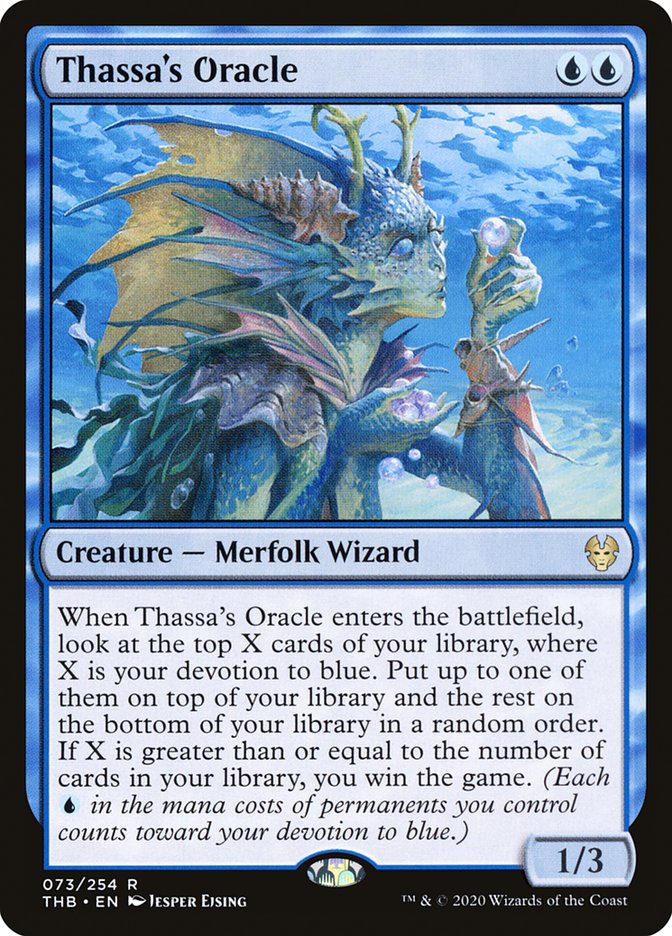
Thassa's Oracle

Thassa's Oracle

Theros Beyond Death introduced Thassa's Oracle, bearing the always-intriguing text ""you win the game."" Initial excitement quickly transformed into concern as the card's fundamental differences from similar effects became apparent. Unlike Laboratory Maniac or Jace, Wielder of Mysteries, which require battlefield presence to function, Thassa's Oracle triggers immediately upon entry, making the win unavoidable once properly executed.

This enter-the-battlefield trigger creates insurmountable problems for interaction. Decks lacking stack-based answers or specific countermeasures cannot prevent the victory once Oracle resolves with an empty library. The two-mana cost compounds these issues, enabling same-turn execution alongside library-emptying effects while remaining easily searchable through numerous tutors due to its creature typing.

The convergence of factors—immediate trigger, minimal cost, broad searchability—makes Thassa's Oracle fundamentally incompatible with healthy gameplay. Combo victories should require some vulnerability window, not execute through uncounterable triggers.

Key ban reasons:

  • Win trigger unavoidable once properly set up
  • Two-mana cost enables same-turn combo execution
  • Enter-the-battlefield ability bypasses removal interaction
  • Easily tutored through multiple search effects
  • Provides no meaningful counterplay window
  • Superior to similar effects that require battlefield presence

Thassa's Oracle must be banned to prevent uninteractive instant-win combos that circumvent normal defensive measures.

← Back to Announcements